Smoosh Face Puppies

Directions

Smoosh Face Puppies Helping smoosh face dogs live healthier, happier lives through responsible breeding, nutrition, training, temperament development, and lifelong support.

🤭 giggling
10/25/2026

🤭 giggling

Behold, the rare frog dog. 🐸🐶 All loaf up front… two tiny back feet sneaking out behind. 😂 Those little kickstands are doing their best to support this baked potato! 🥔🐾

🐾 Your puppy’s first day home doesn’t need to be a big adventure! 💙 Everything is new—the smells, sounds, people, and su...
10/25/2026

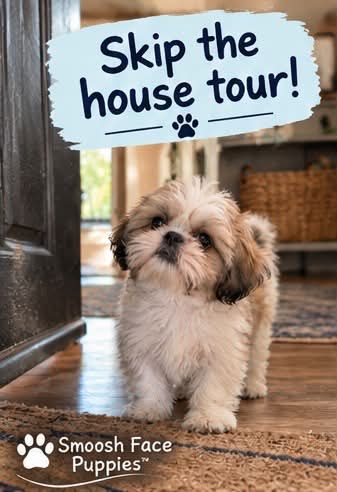
🐾 Your puppy’s first day home doesn’t need to be a big adventure! 💙 Everything is new—the smells, sounds, people, and surroundings. Little brains need time to take it all in. Start with a potty break, one quiet room, gentle exploration, and plenty of peaceful rest.

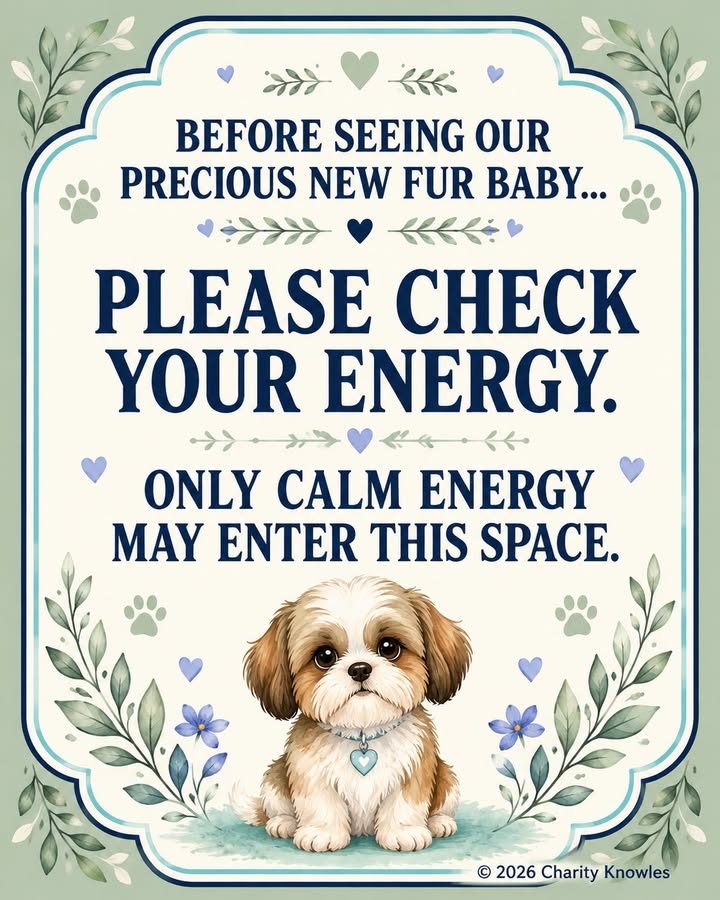
🌿 Remember our Calm-to-Calm Rule™: Start from calm and end from calm. Because when we build the brain first, better behavior follows. 💙 Follow for Episode 2 of Smoosh Puppy School!

Ruff Ruff Ranch & Spa Linda Athena Charity-Knowles

10/25/2026

Yep, It’s a thing!

Believe and…
10/25/2026

Believe and…

09/06/2026

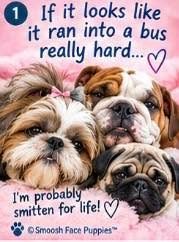
❤️ IF IT LOOKS LIKE IT RAN INTO A BUS REALLY HARD… I’M PROBABLY SMITTEN FOR LIFE.

Seriously.

Give me the squishiest little face. The ridiculous underbite. The eyes that don’t quite agree on which direction we’re headed. The snoring that could probably be detected by the neighbors.

I’m done.

I’m in love.

That’s my dog. 😂❤️

I have loved smoosh-faced dogs for a very long time, and I think part of the reason runs deeper than simply thinking they’re adorable.

I have health issues, too.

Maybe there’s something about looking at one of these little creatures and thinking:

“You know what, buddy? Me too.”

We’re kindred spirits in a funny sort of way.

When the world feels like nothing is going right, I can lie down beside one of my squishy faces, wrap my arms around them and fall asleep while they snore loud enough to shake the house.

And somehow it reminds me:

We all have issues.

These guys certainly do.

Yet they don’t wake up every morning feeling sorry for themselves.

They get up.

They love their people.

They play.

They make us laugh.

They crawl into our laps.

They show up for us every single day.

And goodness, do I love them for it.

My heart would genuinely be broken without these dogs in my life. ❤️

And THAT is exactly why I want us to talk about their health.

Not because I want people to stop owning smoosh faces.

Good luck talking me out of one. 😂

I want us to understand them better because we love them so much.

One of the things every smoosh-face family should understand is something called the craniofacial ratio (CFR).

In simple terms, it describes how long the muzzle is compared with the rest of the skull.

Research has repeatedly shown that extreme shortening of the muzzle is associated with increased risk of Brachycephalic Obstructive Airway Syndrome (BOAS).

Generally, giving these dogs a little more muzzle gives us more opportunity for healthier airway anatomy.

But nose length isn’t the whole story.

We also need to pay attention to:

🐾 How open the nostrils are
🐾 Body condition and weight
🐾 Breathing noise and effort
🐾 Exercise tolerance
🐾 Recovery after activity
🐾 Heat tolerance
🐾 Neck and airway anatomy
🐾 Sleep and breathing patterns
🐾 Veterinary evaluation when something doesn’t look right

And here’s where I think we sometimes get this conversation completely wrong.

Healthier doesn’t have to mean “stop making smoosh faces.”

I don’t WANT to lose the smoosh face.

I love the smoosh face.

I just want to understand how we can responsibly preserve the characteristics we adore while breeding, raising and caring for dogs whose bodies function as well as possible.

And if you already have a little pancake whose nose appears to have been misplaced somewhere around 14 generations ago…

Love that baby.

Then learn everything you possibly can about the body attached to that beautiful little face.

Know what normal breathing looks like.

Know what struggling looks like.

Keep them appropriately lean.

Respect heat and humidity.

Understand their limits.

And don’t dismiss breathing difficulty simply because somebody says, “That’s normal for the breed.”

At Smoosh Face Puppies™ and Ruff Ruff Ranch™, I want education to be part of loving these dogs.

Because awareness isn’t anti-smoosh.

It’s exactly the opposite.

I want these ridiculous, snoring, squishy-faced little creatures beside me for as many healthy years as I can possibly get.

They’ve certainly been there for me.

The least I can do is learn how to be there for them. ❤️🐾

❤️ IF IT LOOKS LIKE IT RAN INTO A BUS REALLY HARD… I’M PROBABLY SMITTEN FOR LIFE.Seriously! Give me the squishiest littl...
09/06/2026

❤️ IF IT LOOKS LIKE IT RAN INTO A BUS REALLY HARD… I’M PROBABLY SMITTEN FOR LIFE.

Seriously!

Give me the squishiest little face. The ridiculous underbite. The eyes that don’t quite agree on which direction we’re headed. The snoring that could probably be detected by the neighbors.

I’m done.

I’m in love.

That’s my dog. 😂❤️

I have loved smoosh-faced dogs for a very long time, and I think part of the reason runs deeper than simply thinking they’re adorable.

I have health issues, too.

Maybe there’s something about looking at one of these little creatures and thinking:

“You know what, buddy? Me too.”

We’re kindred spirits in a funny sort of way.

When the world feels like nothing is going right, I can lie down beside one of my squishy faces, wrap my arms around them and fall asleep while they snore loud enough to shake the house.

And somehow it reminds me:

We all have issues.

These guys certainly do.

Yet they don’t wake up every morning feeling sorry for themselves.

They get up.

They love their people.

They play.

They make us laugh.

They crawl into our laps.

They show up for us every single day.

And goodness, do I love them for it.

My heart would genuinely be broken without these dogs in my life. ❤️

And THAT is exactly why I want us to talk about their health.

Not because I want people to stop owning smoosh faces.

Good luck talking me out of one. 😂

I want us to understand them better because we love them so much.

One of the things every smoosh-face family should understand is something called the craniofacial ratio (CFR).

In simple terms, it describes how long the muzzle is compared with the rest of the skull.

Research has repeatedly shown that extreme shortening of the muzzle is associated with increased risk of Brachycephalic Obstructive Airway Syndrome (BOAS).

Generally, giving these dogs a little more muzzle gives us more opportunity for healthier airway anatomy.

But nose length isn’t the whole story.

We also need to pay attention to:

🐾 How open the nostrils are
🐾 Body condition and weight
🐾 Breathing noise and effort
🐾 Exercise tolerance
🐾 Recovery after activity
🐾 Heat tolerance
🐾 Neck and airway anatomy
🐾 Sleep and breathing patterns
🐾 Veterinary evaluation when something doesn’t look right

And here’s where I think we sometimes get this conversation completely wrong.

Healthier doesn’t have to mean “stop making smoosh faces.”

I don’t WANT to lose the smoosh face.

I love the smoosh face.

I just want to understand how we can responsibly preserve the characteristics we adore while breeding, raising and caring for dogs whose bodies function as well as possible.

And if you already have a little pancake whose nose appears to have been misplaced somewhere around 14 generations ago…

Love that baby.

Then learn everything you possibly can about the body attached to that beautiful little face.

Know what normal breathing looks like.

Know what struggling looks like.

Keep them appropriately lean.

Respect heat and humidity.

Understand their limits.

And don’t dismiss breathing difficulty simply because somebody says, “That’s normal for the breed.”

At Smoosh Face Puppies™ and Ruff Ruff Ranch™, I want education to be part of loving these dogs.

Because awareness isn’t anti-smoosh.

It’s exactly the opposite.

I want these ridiculous, snoring, squishy-faced little creatures beside me for as many healthy years as I can possibly get.

They’ve certainly been there for me.

The least I can do is learn how to be there for them. ❤️🐾

Missing early socialization does not always create a dog that barks, lunges, or tries to escape.Sometimes it creates a d...
08/30/2026

Missing early socialization does not always create a dog that barks, lunges, or tries to escape.

Sometimes it creates a dog that becomes completely still.

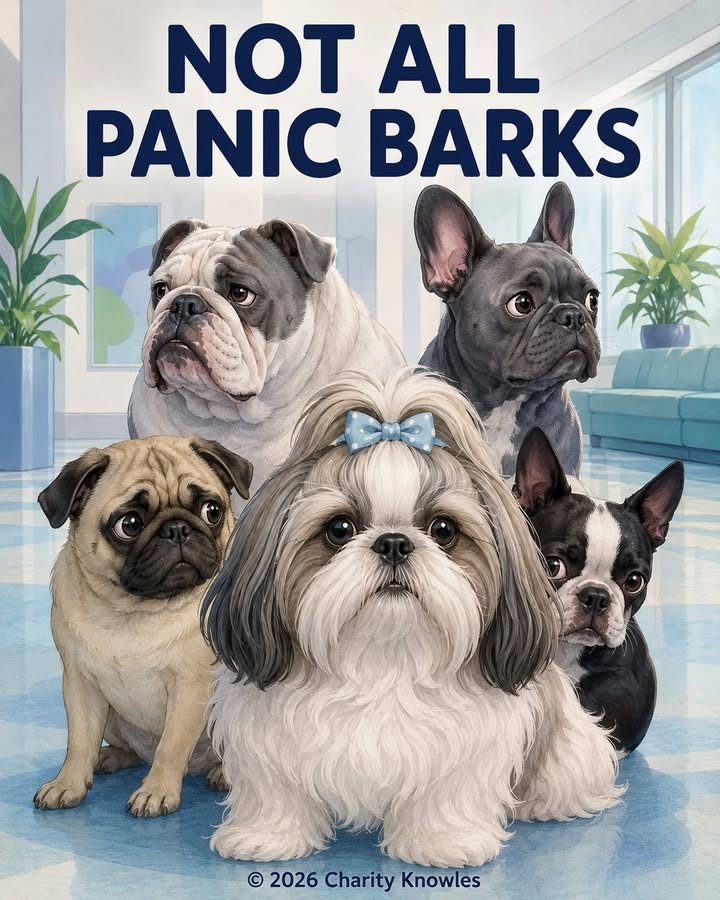
This can happen in any brachycephalic dog… including English Bulldogs, French Bulldogs, Pugs, Shih Tzus, Boston Terriers, Boxers, Pekingese, Japanese Chins, Brussels Griffons, and other flat-faced breeds.

When an unfamiliar environment feels overwhelming, the dog may freeze.

They may become unusually quiet.

They may refuse to walk, hide behind their person, shut down, or appear stubborn.

But that dog may not be calm at all.

Inside the body, the heart rate can rise.

Breathing may become faster and less efficient.

The dog may begin panting, snorting, swallowing, drooling, or struggling to recover.

For a dog already built with a shortened airway, emotional overload can place even more demand on breathing.

Stress affects breathing…

Difficult breathing increases stress…

And the dog can become trapped in what we call The Flat-Faced Stress Spiral™.

This is why early socialization cannot simply mean taking a puppy into busy places and hoping they “get used to it.”

Proper socialization begins from calm.

The puppy experiences one manageable piece of the world.

They are given time to look, process, breathe, and recover.

Then the experience ends from calm.

Every single time.

We are not trying to create a puppy that tolerates chaos.

We are developing a brain and nervous system that can remain open, curious, and regulated when the world changes.

Because a motionless dog is not automatically a comfortable dog.

Sometimes the quietest dog in the room is asking for the most help.

Develop the brain… and behavior follows.

08/29/2026

NO VELOCIRAPTORS ALLOWED

When a new dog enters your home, your first job is not to entertain them, excite them or immediately show them everything.

Your first job is to establish what life in your home feels like.

Calm begins every experience.

Calm ends every experience.

I call this our Calm-to-Calm Rule™.

Before the kennel door opens…calm.

Before food is served…calm.

Before the leash goes on…calm.

Before greeting people…calm.

When playtime ends…return to calm.

When a walk or field trip ends…return to calm.

Every single time.

The best foundation you can give a new dog is simple:

No barking.

No biting.

No jumping.

No pouncing.

In other words…no velociraptors allowed.

That does not mean punishment. It means we calmly interrupt the behavior, lower the excitement and show the dog what works instead.

We do not continue escalating an overstimulated brain and then wonder why the dog cannot control its body.

Development usually moves through three phases…

PHASE ONE…MANAGEMENT

You shorten activities, prevent unnecessary blowups, protect rest and begin learning the dog’s signals.

Success is not asking the dog to tolerate more chaos. Success is preventing chaos while their brain learns a better pattern.

PHASE TWO…THE MIDDLE WORK

Barking, biting, jumping or pouncing may still happen…but less frequently. Recovery becomes faster. Some days may feel like a step backward, even while the overall pattern is moving forward.

This is where the Calm-to-Calm Rule™ matters most.

Do not begin an activity with an overstimulated dog.

Do not end an activity while the dog is still emotionally spinning.

Help the brain return to calm before moving into the next part of the day.

PHASE THREE…RELIABILITY

The dog begins checking in without being reminded. Their body settles more easily. Reactions become less frequent and more manageable.

Calm is no longer something you constantly have to create…it is becoming the dog’s normal starting place.

Your new dog does not need unlimited freedom, constant excitement or an overflowing schedule.

They need structure.

They need rest.

They need clear, kind boundaries.

They need to learn that barking, biting, jumping and pouncing do not move life forward…but calm does.

Start calm. End calm. Every single time.

Because we are raising thoughtful family dogs…not household velociraptors.

Develop the brain…and behavior follows.

NO SMOOSH FACE VELOCIRAPTORS ALLOWEDWhen a new dog enters your home, your first job is not to entertain them, excite the...
08/29/2026

NO SMOOSH FACE VELOCIRAPTORS ALLOWED

When a new dog enters your home, your first job is not to entertain them, excite them or immediately show them everything.

Your first job is to establish what life in your home feels like.

Calm begins every experience.

Calm ends every experience.

I call this our Calm-to-Calm Rule™.

Before the kennel door opens…calm.

Before food is served…calm.

Before the leash goes on…calm.

Before greeting people…calm.

When playtime ends…return to calm.

When a walk or field trip ends…return to calm.

Every single time.

The best foundation you can give a new dog is simple:

No barking.

No biting.

No jumping.

No pouncing.

In other words…no velociraptors allowed.

That does not mean punishment. It means we calmly interrupt the behavior, lower the excitement and show the dog what works instead.

We do not continue escalating an overstimulated brain and then wonder why the dog cannot control its body.

Development usually moves through three phases…

PHASE ONE…MANAGEMENT

You shorten activities, prevent unnecessary blowups, protect rest and begin learning the dog’s signals.

Success is not asking the dog to tolerate more chaos. Success is preventing chaos while their brain learns a better pattern.

PHASE TWO…THE MIDDLE WORK

Barking, biting, jumping or pouncing may still happen…but less frequently. Recovery becomes faster. Some days may feel like a step backward, even while the overall pattern is moving forward.

This is where the Calm-to-Calm Rule™ matters most.

Do not begin an activity with an overstimulated dog.

Do not end an activity while the dog is still emotionally spinning.

Help the brain return to calm before moving into the next part of the day.

PHASE THREE…RELIABILITY

The dog begins checking in without being reminded. Their body settles more easily. Reactions become less frequent and more manageable.

Calm is no longer something you constantly have to create…it is becoming the dog’s normal starting place.

Your new dog does not need unlimited freedom, constant excitement or an overflowing schedule.

They need structure.

They need rest.

They need clear, kind boundaries.

They need to learn that barking, biting, jumping and pouncing do not move life forward…but calm does.

Start calm. End calm. Every single time.

Because we are raising thoughtful family dogs…not household velociraptors.

Develop the brain…and behavior follows.


Ruff Ruff Ranch & Spa

08/29/2026

Missing early socialization does not always create a dog that barks, lunges, or tries to escape.

Sometimes it creates a dog that becomes completely still.

This can happen in any brachycephalic dog… including English Bulldogs, French Bulldogs, Pugs, Shih Tzus, Boston Terriers, Boxers, Pekingese, Japanese Chins, Brussels Griffons, and other flat-faced breeds.

When an unfamiliar environment feels overwhelming, the dog may freeze.

They may become unusually quiet.

They may refuse to walk, hide behind their person, shut down, or appear stubborn.

But that dog may not be calm at all.

Inside the body, the heart rate can rise.

Breathing may become faster and less efficient.

The dog may begin panting, snorting, swallowing, drooling, or struggling to recover.

For a dog already built with a shortened airway, emotional overload can place even more demand on breathing.

Stress affects breathing…

Difficult breathing increases stress…

And the dog can become trapped in what we call The Flat-Faced Stress Spiral™.

This is why early socialization cannot simply mean taking a puppy into busy places and hoping they “get used to it.”

Proper socialization begins from calm.

The puppy experiences one manageable piece of the world.

They are given time to look, process, breathe, and recover.

Then the experience ends from calm.

Every single time.

We are not trying to create a puppy that tolerates chaos.

We are developing a brain and nervous system that can remain open, curious, and regulated when the world changes.

Because a motionless dog is not automatically a comfortable dog.

Sometimes the quietest dog in the room is asking for the most help.

Develop the brain… and behavior follows.

Address

901 Whiting Drive
Yankton, SD
57068

Website

Alerts

Be the first to know and let us send you an email when Smoosh Face Puppies posts news and promotions. Your email address will not be used for any other purpose, and you can unsubscribe at any time.


Shortcuts

Share